
Automatic Biodegradable Packaging Equipment: Key Compliance Checks
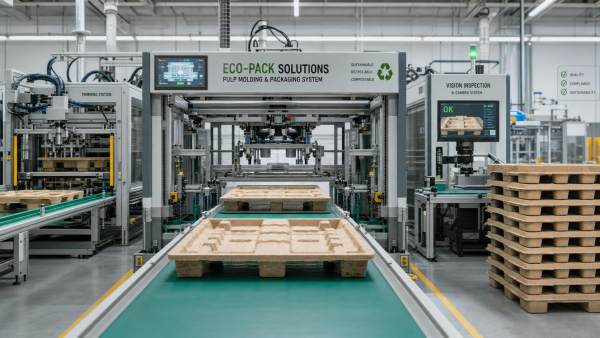
Automatic biodegradable packaging equipment is now judged by more than cycle time or unit cost. In many production environments, compliance performance has become a core measure of equipment value.
That shift is easy to understand. Fiber-based trays, molded pulp packs, paper cushioning, and plastic-free food-service formats now sit inside tighter rules for safety, traceability, labeling, and environmental claims.
For operations running at industrial speed, the real question is whether the line can hold those requirements consistently. A machine that runs fast but drifts out of specification creates waste, audit exposure, and customer risk.
Across the PPMS coverage area, that issue appears repeatedly. Paper machinery, pulp molding systems, converting equipment, and automated packaging lines are increasingly evaluated through the same practical lens: reliable output under real compliance conditions.
What compliance means for automatic biodegradable packaging equipment
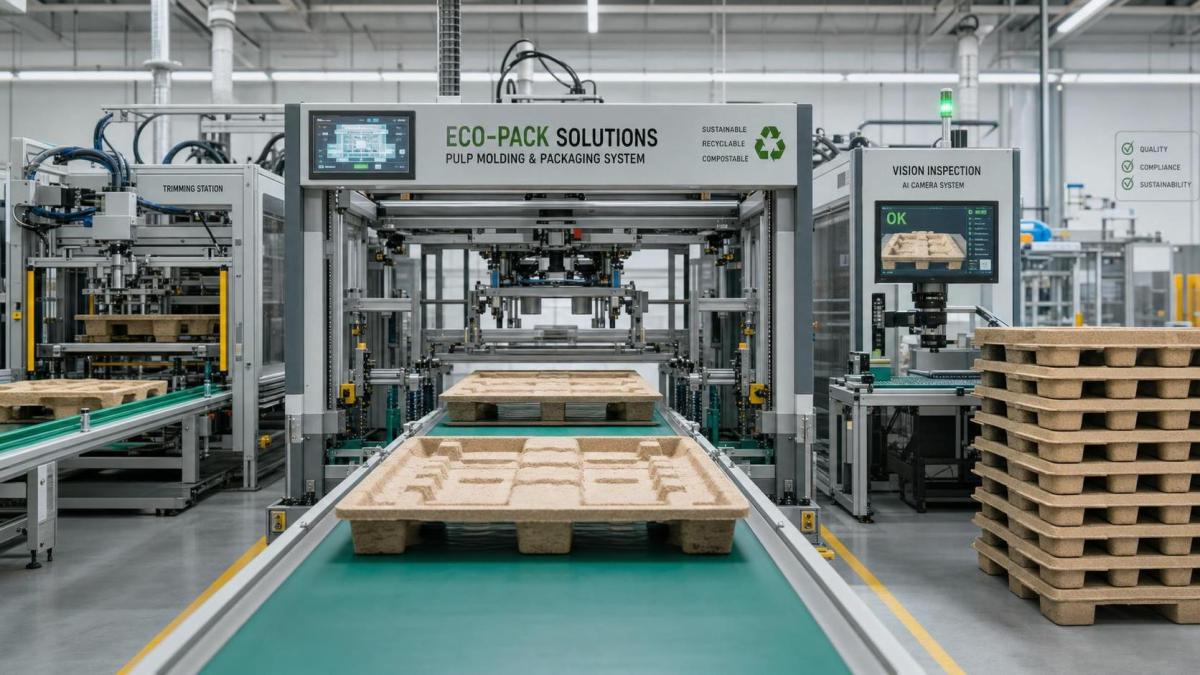
In this context, compliance is broader than legal paperwork. It covers how materials are processed, how the machine is built, and how the finished pack is verified before shipment.
Automatic biodegradable packaging equipment may include pulp molding machines, thermoforming units, tray forming lines, cutting stations, drying sections, robot stacking cells, and integrated inspection modules.
The packaging itself may be made from recycled fiber, virgin kraft pulp, bagasse, bamboo fiber, or other compostable paper-based substrates. Each material type brings different moisture behavior, forming sensitivity, and contamination risk.
As a result, compliance checks need to link material behavior with machine behavior. That is where many problems start, especially when a line is upgraded for higher speed without revisiting controls.
Why the topic matters more now
Plastic-ban substitution has moved biodegradable formats from niche applications into mainstream packaging decisions. Retail, e-commerce, food service, electronics, and logistics now expect scalable fiber-based alternatives.
That demand has changed equipment selection criteria. Buyers no longer compare only output rates, mold numbers, or energy figures. They also ask how the line handles traceability, hygiene, machine guarding, and claim validation.
ESG reporting adds another layer. If a packaging line is presented as sustainable, the supporting process data must be credible. Inaccurate material declarations or unstable scrap rates quickly weaken that position.
This is why PPMS often frames machinery through both technical and commercial performance. Compliance is no longer separate from ROI. It influences export readiness, customer approval, and long-term operating stability.
The checks that deserve the closest attention
A useful review starts with the points where nonconformity is most likely to appear. These are usually material input, process control, contact surfaces, safety systems, and output verification.
Material and input control
Biodegradable does not automatically mean compliant. Raw fiber source, additives, coatings, release agents, inks, and adhesives should match the intended market and end-use requirements.
For automatic biodegradable packaging equipment, incoming material checks should confirm lot identity, moisture range, foreign matter level, and supplier declarations. In food-contact applications, migration-related documentation matters even before production starts.
Process stability and repeatability
Many compliance failures are actually process-control failures. Pulp consistency, vacuum performance, drying temperature, dwell time, forming pressure, and trim accuracy directly affect product conformity.
If the line lacks stable closed-loop control, biodegradable packs may vary in wall thickness, moisture retention, nesting geometry, or edge integrity. Those deviations can compromise strength, labeling accuracy, and downstream packing efficiency.
Hygiene and cleanability
In wet-end and forming sections, residue buildup can become a serious compliance issue. Machine frames, tanks, transfer points, and mold surfaces should allow practical cleaning and inspection access.
That is especially relevant where starches, binders, or food-contact fibers are involved. Poor drainage design or hard-to-clean surfaces raise the probability of microbial growth and cross-batch contamination.
Machine safety and operator protection
Automatic biodegradable packaging equipment often combines heat, vacuum, moving molds, hydraulic motion, servo drives, and stack handling. Safety compliance therefore needs a full machine-risk perspective.
Guarding, interlocks, emergency stops, lockout points, thermal shielding, and fault response should be tested in live operating conditions. A documented safety function is not enough if reset logic is easily bypassed on the floor.
Labeling and claim accuracy
Environmental claims attract scrutiny. If packaging is marked biodegradable, compostable, recyclable, or plastic-free, those claims must align with the actual substrate, coatings, and destination market rules.
Where printing or embossing is integrated, registration control and version management become compliance checks too. Incorrect artwork can turn a technically acceptable pack into a noncompliant shipment.
How to read equipment risk by application
Not every line faces the same compliance pressure. The required review depth changes with product use, market destination, and process complexity.
This comparison matters because the same automatic biodegradable packaging equipment can look acceptable in a factory trial yet fail under customer-specific rules. Context changes the risk profile.
What strong verification usually looks like
Reliable compliance checks are built into the line, not added only during final inspection. That usually means a mix of machine data, physical testing, visual inspection, and controlled documentation.
- Incoming fiber and additive records tied to production lots.
- Monitored moisture, temperature, vacuum, and pressure parameters.
- Routine mold-condition checks and wear tracking.
- Inspection points for edge quality, thickness, shape, and nesting.
- Validation of guard functions, alarms, and emergency-stop behavior.
- Controlled artwork, claim wording, and packaging specification versions.
In practice, the best systems connect these checks to trend analysis. A rising reject rate, unstable vacuum level, or repeated labeling deviation is more useful when it is visible early.
Where equipment design influences compliance results
Some compliance outcomes are strongly shaped by design choices made before commissioning. They are not easy to fix later with extra inspection.
For example, mold exchange time affects cleaning discipline. Closed-loop tension or registration control affects printed claim accuracy. Stable heat transfer affects dryness and dimensional repeatability.
On higher-output lines, machine vision can add another layer of protection. When calibrated correctly, it helps catch shape defects, contamination marks, print errors, and stacking anomalies before pallets are built.
This is one reason PPMS tracks topics beyond simple forming speed. Web handling, dewatering, servo motion, adhesive behavior, and print registration often influence whether automatic biodegradable packaging equipment remains compliant at scale.
A practical review path before approval or upgrade
A grounded review does not need to be complicated, but it should be structured. Start by matching the packaging claim, substrate, and destination market to the actual machine process.
Then test whether the line can hold specification through normal variation. Short successful trials are not enough. The more useful check is performance across shifts, changeovers, and maintenance intervals.
It also helps to separate three questions. Is the material compliant? Is the machine inherently capable? Is the control system proving that capability with traceable records?
When those answers are clear, decisions on supplier comparison, retrofit scope, and audit readiness become more defensible. That is usually the point where equipment data turns into a reliable operating standard.
For any evaluation of automatic biodegradable packaging equipment, the next step is to build a line-specific checklist around material inputs, process windows, cleaning access, safety validation, and claim control. That creates a better basis for approval than speed claims alone.
Related Intelligence
- Plastic Ban & FSC CompliancePackaging ESG compliance checklist for verifying sustainable materialsPackaging ESG compliance checklist: verify sustainable materials with traceability, safety, recyclability, carbon evidence, and supplier controls.
- Plastic Ban & FSC ComplianceWhen does packaging material substitution require FSC certification?Packaging material substitution: learn when FSC certification, chain-of-custody verification, and claim controls are required for compliant, credible packaging changes.
- Plastic Ban & FSC ComplianceHow exporters can transition to plastic-free packaging without shipment delaysPlastic-free packaging transition for exporters: reduce plastic without shipment delays using staged testing, fiber-based solutions, supplier readiness, and reliable pack-out controls.
The Morning Broadsheet
Daily chemical briefings, market shifts, and peer-reviewed summaries delivered to your terminal.