
EU PPWR Takes Effect, Raising Traceability Bar
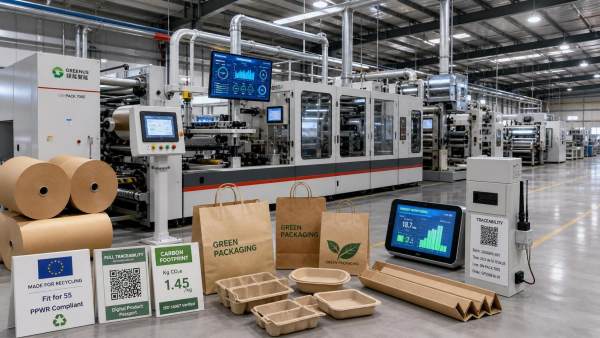
On January 1, 2026, the EU’s Packaging and Packaging Waste Regulation (PPWR) entered full mandatory effect, with enforcement pressure expected to intensify from June 2026. For companies involved in paper-based packaging sold in Europe, this is not only a packaging compliance issue but also a manufacturing and export issue for upstream equipment suppliers, especially those serving paper bags, paper trays, paper edge protectors, and related converting lines. What deserves closer attention is that FSC/PEFC chain-of-custody proof and life-cycle carbon footprint declarations are now directly tied to market access and EPR registration capability for downstream customers.
What the rule now requires in practice
According to the information provided, the PPWR became fully mandatory on January 1, 2026, and a peak enforcement phase is expected to begin in June 2026.
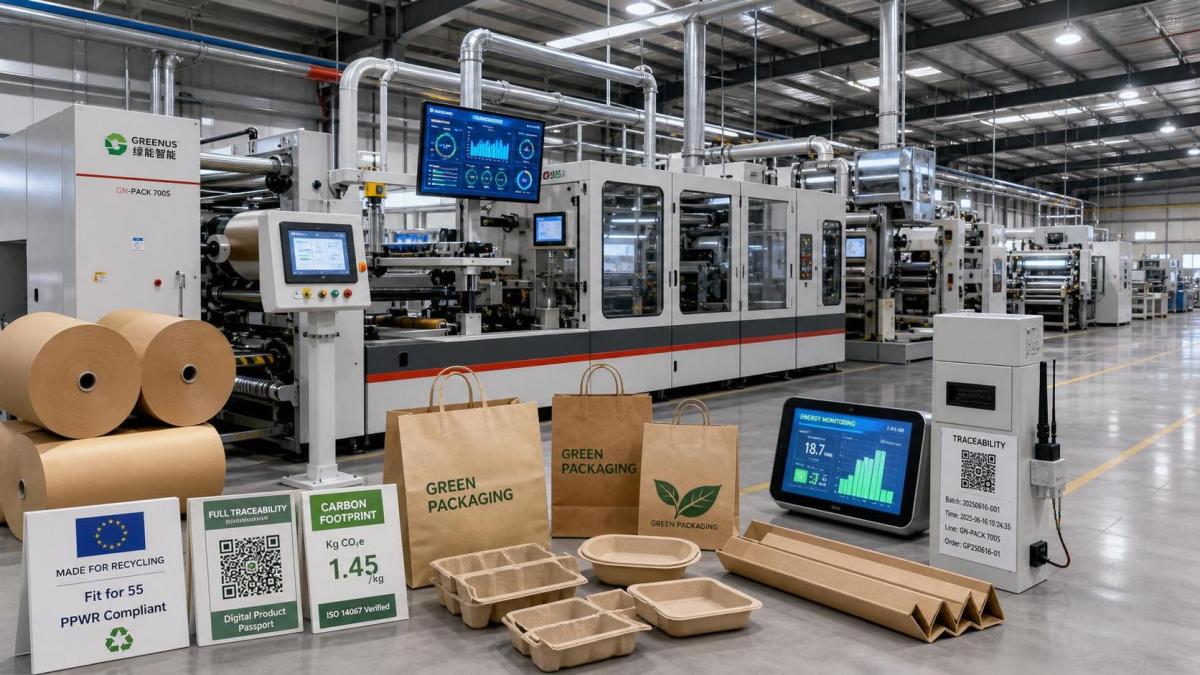
The requirement applies to paper-based packaging sold in the EU, including paper bags, paper trays, and paper edge protectors. These products must be supported by FSC/PEFC chain-of-custody documentation as well as a full life-cycle carbon footprint declaration.
The same information indicates that this requirement is pushing equipment makers such as Auto Paper Bag/Straw Machines and Rotary Egg Tray/Pulp Molders to upgrade control systems. The required upgrades include integrating raw-material traceability interfaces and energy-consumption data collection modules.
If such capabilities are not in place, downstream customers may be unable to complete EPR registration or secure market access in the EU.
Why the impact extends beyond packaging producers
Export-oriented equipment suppliers face a functional compliance shift
From an industry perspective, the immediate effect is not limited to packaging converters. Equipment manufacturers supplying paper packaging production lines may be affected because customer compliance now depends in part on whether machinery can support traceability records and energy data capture during production.
The business impact is likely to appear in product specifications, system integration requirements, technical documentation, and customer acceptance criteria for equipment delivered to paper packaging producers serving the EU market.
Packaging manufacturers face tighter documentation dependencies
For converters making paper bags, trays, edge protectors, and similar products, the requirement may affect procurement, production records, and compliance filing workflows. Analysis shows that the issue is no longer only whether paper-based packaging is accepted as a material category, but whether the supporting chain-of-custody and carbon data can be assembled in a form usable for market entry.
What deserves closer attention is that documentation gaps upstream may directly affect the downstream ability to register under EPR and continue commercial shipments.
Procurement and supply-chain service roles become more exposed
Raw-material sourcing teams and supply-chain service providers may also feel the impact because FSC/PEFC proof and carbon footprint declarations depend on document continuity across multiple links. Observably, the practical pressure may fall on supplier qualification, file consistency, handover timing, and cross-party coordination rather than on a single transaction point.
What companies should watch now
Whether machine controls can generate usable records
Companies purchasing or exporting relevant machinery should closely review whether control systems can connect traceability inputs with production data and whether energy-consumption information can be captured in a form that customers can actually use for compliance documentation.
Whether customer delivery requirements are changing faster than contracts
Because enforcement pressure is expected to rise from June 2026, companies should pay attention to whether buyers in the EU or suppliers serving the EU are already changing technical annexes, acceptance standards, or document checklists ahead of formal enforcement actions.
Whether supplier credentials and paperwork are complete enough
For businesses involved in raw material purchasing, packaging conversion, or equipment export, practical focus should remain on FSC/PEFC chain-of-custody materials, carbon-footprint-related declarations, and the completeness of supporting records needed by customers for EPR-related procedures.
Whether compliance language and business execution still match
Analysis shows that one key risk is the gap between policy wording and operational readiness. A company may understand the requirement in principle, yet still face delays if supplier files, machine data interfaces, and customer-facing compliance packages are not aligned in day-to-day execution.
How this should be read at this stage
Observably, this development is better understood as an active market-access threshold rather than a distant policy signal. The rule has already entered full mandatory effect, and the enforcement timeline provided points to near-term operational pressure rather than a purely long-range adjustment.
At the same time, it is more appropriate to understand this as an ongoing compliance transition rather than a finished outcome. The confirmed facts show a clear requirement and a clear direction of equipment upgrades, but the pace and depth of implementation across different companies still require continued observation.
Why this matters for the paper packaging equipment trade
The key industry meaning of this update is that compliance expectations for paper-based packaging in the EU are now reaching further upstream into machinery capability, data collection, and traceability support. For exporters and manufacturers, the issue is no longer limited to output quality or production efficiency alone.
From an editorial perspective, the most neutral reading is that this is a concrete short-term compliance change with longer-term implications for equipment design and customer servicing. It should be tracked not as a passing headline, but as a practical operating condition for companies linked to EU-bound paper packaging production.
Basis of this article and areas for continued verification
This article is based on the user-provided news title, event date, and event summary. The confirmed input covers the PPWR effective date, the expected enforcement peak from June 2026, the FSC/PEFC and life-cycle carbon footprint requirements for paper-based packaging sold in the EU, and the resulting pressure on equipment system upgrades.
For this type of industry update, source categories that usually matter include official regulatory notices, company announcements, trade association information, authoritative media reporting, and relevant standards or certification documents. A specific official source link was not provided in the input, so continued verification remains necessary.
Follow-up attention should focus on any further official wording, enforcement interpretation, customer documentation expectations, and how traceability and energy-data functions are being translated into actual machinery and delivery requirements.
Related Intelligence
- Plastic Ban & FSC ComplianceHow paper packaging waste reduction for ecommerce starts with right-sizingPaper packaging waste reduction for ecommerce starts with right-sizing—reduce material use, improve protection, streamline fulfillment, and create better customer experiences.
- Plastic Ban & FSC ComplianceHow to verify whether recyclable packaging meets PPWR requirementsPPWR recyclable packaging: learn how to verify design, recycling-stream compatibility, supplier evidence, claims, and technical files for confident EU market compliance.
- Plastic Ban & FSC ComplianceHow to verify a food contact packaging supplier meets compliance needsFood Contact Packaging supplier verification starts with use-case, testing, traceability, and change control. Learn how to reduce compliance risk and choose a reliable partner.
The Morning Broadsheet
Daily chemical briefings, market shifts, and peer-reviewed summaries delivered to your terminal.